Navigating the freelance design world requires more than just artistic talent; it demands shrewd business acumen and strategic planning. This guide equips aspiring and established freelance designers with the essential knowledge and practical tools to thrive in this competitive yet rewarding field. From securing clients and setting competitive rates to managing finances and marketing your services effectively, we delve into every aspect of building a successful freelance design career.
We’ll explore proven methods for attracting clients, crafting compelling proposals, and establishing strong working relationships. Learn how to structure your pricing, manage your finances efficiently, and maintain a healthy work-life balance. This comprehensive resource provides actionable advice and practical templates to help you confidently navigate the challenges and reap the rewards of freelance design.
Finding Freelance Design Work
Securing consistent freelance design work requires a multifaceted approach, combining strategic online presence building with proactive client outreach. Success hinges on effectively showcasing your skills, targeting the right platforms, and crafting compelling proposals. This section will Artikel key strategies to help you navigate the freelance landscape and find rewarding design projects.
Top Online Platforms for Freelance Designers
Choosing the right platform is crucial for maximizing your freelance design opportunities. Each platform offers unique advantages and disadvantages, impacting your reach, client base, and earning potential. Consider these factors when selecting where to list your services.
| Platform | Pros | Cons | Payment Methods |
|---|---|---|---|
| Upwork | Large client base, diverse project types, established reputation. | High competition, potential for low-paying projects, platform fees. | Direct payment, escrow service. |
| Fiverr | Easy to use, quick project turnaround, potential for rapid growth. | Highly competitive, can lead to undervaluing your services, focus on gig-based work. | Direct payment through platform. |
| Dribbble | Strong community of designers, opportunity to showcase work, potential for direct client contact. | Less direct project posting, requires building a strong profile, less structured payment system. | Direct payment, typically negotiated outside the platform. |
| Behance | Similar to Dribbble, excellent for portfolio building, opportunities for exposure. | Less emphasis on direct project sourcing, relies on self-promotion, less structured payment system. | Direct payment, typically negotiated outside the platform. |
| Professional networking platform, opportunities to connect with potential clients directly. | Requires active networking, less focused on freelance project postings, requires building a strong professional profile. | Direct payment, typically negotiated outside the platform. |
Strategies for Creating a Compelling Online Portfolio
Your online portfolio serves as your primary marketing tool. A well-curated portfolio showcases your best work, highlighting your design skills and style, and ultimately, securing client interest.
- Showcase your best work: Select projects that demonstrate your range of skills and highlight your unique design aesthetic. Prioritize quality over quantity.
- High-quality visuals: Ensure your images are crisp, clear, and professionally presented. Use a consistent style and branding across your portfolio.
- Detailed project descriptions: Provide context for each project, outlining the challenge, your approach, and the results achieved. Quantify your achievements whenever possible (e.g., “increased website traffic by 20%”).
- User-friendly navigation: Make it easy for potential clients to browse your work. Use clear categories, intuitive menus, and a fast-loading website.
- Client testimonials: Include positive feedback from previous clients to build trust and credibility. Focus on quantifiable results and client satisfaction.
Sample Email Template for Reaching Out to Potential Clients
Direct outreach can be highly effective in securing freelance design work. A well-crafted email showcases your professionalism and demonstrates your understanding of the client’s needs.
Subject: Enhancing [Client Company Name]’s Brand with [Your Expertise]
Dear [Client Name],
My name is [Your Name], and I’m a freelance designer specializing in [Your Specialization]. I’ve been consistently impressed by [Client Company Name]’s work in [Client Industry], particularly [Specific Project or Campaign].
I believe my skills in [Specific Skill 1], [Specific Skill 2], and [Specific Skill 3] align perfectly with your current needs, as evidenced by [Mention something specific from their website or recent work]. I’ve attached my portfolio for your review, which showcases similar projects I’ve successfully completed.
I’d be delighted to discuss how I can contribute to [Client Company Name]’s success. Would you be available for a brief call next week to explore this further?
Thank you for your time and consideration.
Sincerely,
[Your Name]
[Your Website/Portfolio Link]
Setting Rates and Managing Finances
Setting competitive rates and effectively managing your finances are crucial for long-term success as a freelance designer. Understanding different pricing models and creating a robust budget are key to ensuring profitability and financial stability. This section will explore these essential aspects of running a successful freelance design business.
Pricing Models for Freelance Designers
Freelance designers typically utilize three main pricing models: hourly rates, project-based fees, and value-based pricing. Each has its own advantages and disadvantages, and the best choice depends on the project, your experience, and your business goals.
- Hourly Rate: This is the simplest model, charging a fixed amount per hour worked. It’s straightforward to understand and calculate, offering predictability for the client and designer in terms of cost. However, it can be disadvantageous if the project scope changes unexpectedly, leading to disputes or additional charges. It also doesn’t always reflect the value of your design skills and experience, potentially underselling your expertise on simpler projects.
- Project-Based Fee: This model involves setting a fixed price for the entire project, regardless of the time spent. This offers more predictability for both parties and eliminates the risk of scope creep leading to disputes. It requires a detailed understanding of the project scope upfront, though, and can be risky if the project takes longer than anticipated. It also makes it harder to track your actual hourly rate and potentially profitability for a given project.
- Value-Based Pricing: This approach focuses on the value your design delivers to the client, rather than the time invested. It considers the impact of your work on the client’s business, such as increased sales or brand recognition. This model commands higher rates, reflecting the true worth of your skills and experience. However, it requires a strong understanding of your client’s business and the ability to effectively communicate the value proposition of your design services.
It may be harder to justify to clients initially.
Sample Freelance Design Budget Spreadsheet
Tracking income and expenses is crucial for financial health. A simple spreadsheet can effectively manage this.
| Month | Income | Expenses | Profit |
|---|---|---|---|
| January | $5000 | $1500 | $3500 |
| February | $4000 | $1200 | $2800 |
| March | $6000 | $1800 | $4200 |
| Total | $15000 | $4500 | $10500 |
The “Expenses” column would include items like software subscriptions (Adobe Creative Cloud), office supplies, marketing costs, taxes, health insurance, and any other business-related expenditures. The “Income” column tracks all client payments. This simple format allows for easy monitoring of monthly and overall profitability.
Calculating a Profitable Hourly Rate
Determining a profitable hourly rate involves considering your desired income, overhead costs, and the number of billable hours per year. A common formula is:
Hourly Rate = (Desired Annual Income + Annual Overhead Costs) / (Billable Hours per Year)
For example: If your desired annual income is $60,000, your annual overhead costs are $10,000, and you plan to work 1500 billable hours per year, your hourly rate would be:
($60,000 + $10,000) / 1500 hours = $46.67 per hour
This calculation ensures that you cover your expenses and achieve your desired income level. Remember to regularly review and adjust your hourly rate to reflect changes in your expenses, market rates, and your experience level.
Client Communication and Project Management
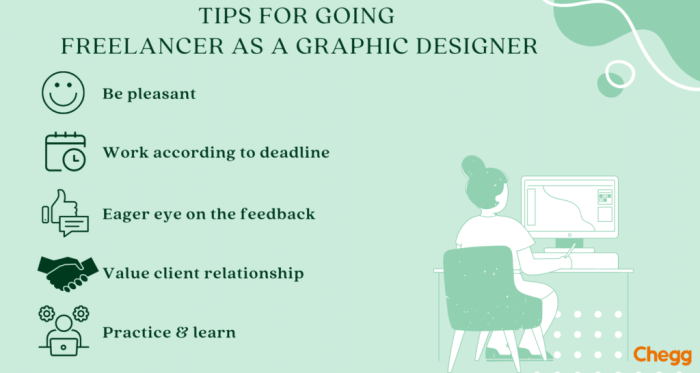
Effective communication and robust project management are crucial for freelance designers. These skills directly impact client satisfaction, project success, and your overall reputation. Maintaining clear, consistent communication from the initial brief to final delivery minimizes misunderstandings and ensures everyone is on the same page. Proactive project management streamlines workflows, manages deadlines, and ultimately contributes to a smoother, more profitable experience for both you and your client.Successful client relationships hinge on transparent and proactive communication.
This involves setting clear expectations early, actively listening to client concerns, and responding promptly to inquiries. Conflict resolution requires empathy, a willingness to find common ground, and a focus on solutions rather than assigning blame. Documenting all communication, including decisions and changes, protects both parties and helps maintain a clear project record.
Effective Communication Strategies
Establishing a consistent communication channel (email, project management software, etc.) is key. Regular check-ins, perhaps weekly or bi-weekly depending on project complexity, help maintain momentum and address potential issues before they escalate. Active listening ensures you fully understand the client’s vision and needs, preventing costly rework later. When conflicts arise, focus on understanding the client’s perspective, propose solutions collaboratively, and always maintain a professional and respectful tone.
For example, if a client requests a significant change outside the initial scope, calmly explain the implications on the timeline and budget, offering alternative solutions or proposing a revised scope of work with an adjusted price.
Project Brief Examples
A well-defined project brief serves as the foundation for a successful project. It should include:
- Project Goal: A concise statement outlining the client’s objectives for the project (e.g., “Increase brand awareness through a new logo and website design”).
- Scope of Work: A detailed list of all deliverables, including specific design elements, revisions, and file formats (e.g., “Design three logo concepts, create a website homepage, and provide all source files in AI and PSD formats”).
- Timeline: Key milestones and deadlines, including project start and end dates, review periods, and delivery dates (e.g., “Concept presentation: Week 2, Client feedback and revisions: Week 3-4, Final delivery: Week 6”).
- Payment Terms: Clearly Artikel payment schedule, milestones tied to payments, and accepted payment methods (e.g., “50% upfront upon project commencement, 50% upon final delivery”).
- Communication Protocol: Specify preferred communication methods and response times (e.g., “Primary communication will be via email. Responses will be provided within 24 hours”).
Sample Project Timeline (Gantt Chart Description)
Imagine a Gantt chart with tasks listed vertically and a timeline across the top, typically measured in days or weeks. For a website redesign project, tasks might include:
- Discovery & Planning (Week 1-2): Client brief review, competitor analysis, site mapping, wireframing.
- Design (Week 3-5): Homepage design, internal page designs, creation of design mockups.
- Development (Week 6-8): Website development, content integration, testing.
- Client Review & Revisions (Week 9): Presentation of the completed website, addressing client feedback and implementing revisions.
- Launch (Week 10): Final testing, website launch, and post-launch support.
Each task would be represented by a horizontal bar, the length corresponding to its duration. Dependencies between tasks would be visually represented, for example, development cannot begin before design is complete. This visual representation allows for easy monitoring of progress and identification of potential delays. Critical path analysis, identifying the sequence of tasks that determine the shortest possible project duration, can be easily seen on a Gantt chart.
For instance, if the development phase is delayed, the launch date will also be affected.
Mastering Design Skills and Software
Success as a freelance designer hinges on a strong command of design principles and proficiency in relevant software. This section will explore essential software, the importance of continuous learning, and the diverse range of design styles available to you. Mastering these aspects will allow you to confidently tackle a wide array of projects and deliver exceptional results.
Essential Design Software Programs and Key Features
Proficiency in design software is paramount for freelance designers. The following programs represent a solid foundation for building a successful career. While many programs exist, focusing on mastering a few key applications is more effective than superficially learning many.
- Adobe Photoshop: Photoshop is the industry standard for raster-based image editing. Key features to master include:
- Layer management: Understanding layer styles, blending modes, and masks is crucial for creating complex and well-organized designs. This allows for non-destructive editing, making revisions easier and cleaner.
- Selection tools: Precise selection using the lasso, pen, and magic wand tools is essential for retouching, masking, and isolating elements within an image.
- Adjustment layers: Mastering adjustment layers (brightness/contrast, curves, hue/saturation) allows for non-destructive color correction and image enhancement.
- Adobe Illustrator: Illustrator is the go-to software for vector-based graphics. Key features include:
- Pen tool mastery: The pen tool is the cornerstone of Illustrator. Learning to create precise paths and curves is vital for creating clean, scalable logos and illustrations.
- Working with type: Understanding typography, kerning, and tracking is crucial for creating visually appealing and legible text-based designs.
- Creating and using brushes: Custom brushes can greatly enhance your workflow and allow for unique design styles. Mastering brush creation and customization is key for creating complex vector illustrations.
- Adobe InDesign: InDesign is the industry standard for page layout and design. Key features to learn are:
- Master pages: Using master pages allows for efficient management of consistent elements across multiple pages, such as headers, footers, and page numbers.
- Text and image placement: Efficiently placing and manipulating text and images within a layout is crucial for creating professional-looking documents.
- Working with styles: Creating and using paragraph and character styles maintains consistency and simplifies editing throughout the document.
The Importance of Continuous Learning and Professional Development
The design field is constantly evolving. New software, techniques, and design trends emerge regularly. Continuous learning is not just beneficial; it’s essential for staying competitive and relevant. This involves actively seeking out new tutorials, attending workshops, participating in online courses, and engaging with the design community. Staying updated on current design trends and software updates ensures your skills remain sharp and in demand.
For example, the rise of AI tools necessitates understanding their capabilities and limitations in the design workflow.
Design Styles and Their Applications
Various design styles cater to different purposes and audiences. Understanding these styles and their applications allows you to tailor your work to specific project requirements.
- Minimalism: Characterized by simplicity, clean lines, and a limited color palette. Often used for branding, websites, and user interfaces where clarity and ease of understanding are paramount. Think of the Apple brand aesthetic as a prime example.
- Modern: Emphasizes clean lines, geometric shapes, and a focus on functionality. Often incorporates bold colors and typography. Suitable for websites, logos, and marketing materials that aim for a contemporary and sophisticated feel.
- Vintage: Evokes a sense of nostalgia through the use of retro colors, fonts, and textures. Effective for branding, packaging, and marketing materials targeting a specific nostalgic audience. Think of a vintage clothing brand’s logo or packaging design.
- Art Deco: Known for its geometric patterns, bold colors, and luxurious feel. Often used in branding, packaging, and interior design projects aiming for a sense of elegance and sophistication.
Marketing Yourself as a Freelance Designer
Successfully marketing your freelance design services is crucial for attracting clients and building a sustainable business. A multifaceted approach, leveraging both online and offline strategies, is key to reaching your target audience and establishing your brand. This section focuses on developing a strong online presence and building valuable industry connections.
A robust online marketing strategy is essential for reaching potential clients. Social media platforms offer a powerful way to showcase your portfolio, engage with potential clients, and build brand awareness. Networking within the design industry also plays a vital role in securing projects and collaborations.
Social Media Strategy for Freelance Designers
A consistent and strategic approach to social media is vital for attracting clients. Different platforms cater to different audiences and require unique content strategies. The following Artikels a plan for Instagram, Behance, and LinkedIn.
- Instagram: Post 3-5 times per week. Content should include high-quality images of your work, behind-the-scenes glimpses into your creative process, client testimonials (with permission), and engaging stories showcasing your personality. Use relevant hashtags to increase visibility.
- Behance: Showcase your best projects in detail on Behance. This platform is portfolio-centric, so focus on presenting your work in a professional and visually appealing manner. Aim for at least one new project upload per month, providing thorough descriptions and context.
- LinkedIn: Maintain a professional profile highlighting your skills and experience. Share industry articles, participate in relevant discussions, and connect with other designers and potential clients. Post 1-2 times per week, focusing on industry insights, professional achievements, and thought leadership pieces.
Three Taglines for a Freelance Design Business
A strong tagline encapsulates your brand’s unique selling proposition (USP) and resonates with your target audience. Here are three taglines emphasizing different USPs:
- “Crafting Visuals That Tell Your Story.” This tagline emphasizes the narrative aspect of design and appeals to clients who value storytelling.
- “Innovative Design, Exceptional Results.” This tagline highlights both creativity and effectiveness, attracting clients seeking high-quality, impactful design.
- “Your Vision, Our Expertise. Design Simplified.” This tagline focuses on client collaboration and ease of working with the designer, appealing to those who value a straightforward and efficient process.
Building a Strong Professional Network
Networking is crucial for securing projects and staying abreast of industry trends. A strong network provides access to opportunities, collaborations, and valuable mentorship.
- Attend Industry Events: Conferences, workshops, and meetups offer opportunities to connect with other designers, potential clients, and industry leaders. Actively participate in discussions and exchange contact information.
- Engage Online: Participate in online design communities, forums, and social media groups. Share your work, offer insightful comments, and engage in constructive conversations. This helps to establish your expertise and build relationships.
- Collaborate with Other Designers: Collaborating on projects can expand your network and introduce you to new clients. Seek out complementary skill sets and offer your expertise in return for access to new opportunities.
Designer Tips and Design Services
Successfully navigating the freelance design world requires more than just artistic talent; it demands a strategic approach to business management and personal well-being. This section will explore practical tips for maintaining a healthy work-life balance and delve into the diverse range of services freelance designers offer, alongside the advantages and disadvantages of specialization versus offering a broader service portfolio.
Maintaining a Healthy Work-Life Balance
Balancing the demands of freelance work with personal life is crucial for long-term success and well-being. Neglecting self-care can lead to burnout and decreased productivity. The following tips offer practical strategies for maintaining a healthy equilibrium.
- Set Clear Boundaries: Establish specific work hours and stick to them as much as possible. Avoid working late into the night or on weekends unless absolutely necessary.
- Prioritize Tasks: Use project management tools to organize your workload and prioritize tasks based on deadlines and importance. This helps avoid feeling overwhelmed.
- Schedule Breaks: Regular breaks throughout the workday are essential for maintaining focus and preventing burnout. Step away from your computer, stretch, or take a short walk.
- Delegate When Possible: If feasible, outsource tasks like administrative work or social media management to free up time for design projects.
- Plan for Downtime: Schedule regular time off, even if it’s just a day or two each month. This allows for rest and rejuvenation.
- Exercise Regularly: Physical activity helps reduce stress and improve overall well-being. Aim for at least 30 minutes of exercise most days of the week.
- Maintain a Healthy Diet: Nourishing your body with healthy foods provides sustained energy and improves mental clarity.
- Disconnect After Work: Set aside time each evening to disconnect from work and engage in relaxing activities. This could include reading, spending time with loved ones, or pursuing hobbies.
- Set Realistic Goals: Avoid overcommitting yourself to projects. Be realistic about your capacity and don’t take on more than you can handle comfortably.
- Seek Support: Connect with other freelance designers or join professional organizations for support and networking. Sharing experiences and challenges can be invaluable.
Types of Design Services Offered by Freelance Designers
Freelance designers offer a diverse range of services catering to various client needs. Understanding these different service types helps in specializing or diversifying your offerings.
- Logo Design: Creating unique and memorable logos that represent a brand’s identity. This includes various iterations and revisions to meet client specifications.
- Web Design: Designing user-friendly and visually appealing websites, encompassing aspects like layout, navigation, and user experience (UX).
- Graphic Design: Creating visual concepts for various media, including brochures, posters, advertisements, and social media graphics. This involves understanding typography, color theory, and visual hierarchy.
- Branding & Identity Design: Developing a comprehensive brand strategy that encompasses logo design, color palettes, typography, and overall brand messaging.
- UI/UX Design: Designing user interfaces and user experiences for websites and applications, focusing on usability and user satisfaction. This requires a strong understanding of user behavior and interaction design principles.
Specializing vs. Offering a Broad Range of Services
The decision to specialize or offer a broad range of design services significantly impacts a freelance designer’s career trajectory. Each approach presents distinct advantages and disadvantages.
| Feature | Specialization Advantages | Specialization Disadvantages | Broad Range Advantages | Broad Range Disadvantages |
|---|---|---|---|---|
| Market Positioning | Stronger brand identity, perceived expertise | Limited client base, potential for niche market saturation | Wider client base, increased opportunities | Less focused expertise, potential for diluted brand identity |
| Pricing | Potential for higher rates due to specialized skills | May struggle to compete on price with generalists | More flexibility in pricing, potential for volume discounts | May need to adjust prices based on project complexity |
| Marketing | Easier to target specific audiences | Requires focused marketing efforts within a niche | Wider marketing reach, diverse portfolio | Marketing needs to address diverse services and target audiences |
| Skill Development | Deep expertise in a specific area | Limited skill diversification, potential for stagnation | Broader skillset, adaptability to various projects | Requires continuous learning across multiple design areas |
Ultimately, success as a freelance designer hinges on a blend of creative prowess and savvy business practices. By mastering the art of client communication, diligently managing finances, and continuously honing your design skills, you can build a thriving and fulfilling career. Remember to leverage the power of online platforms, network strategically, and always prioritize your well-being. This guide serves as a roadmap, empowering you to navigate the freelance landscape with confidence and achieve your professional aspirations.
User Queries
How do I handle difficult clients?
Maintain professional communication, clearly define expectations upfront, and document all agreements. If conflicts arise, address them promptly and calmly, seeking mediation if necessary.
What legal considerations should I be aware of?
Consult with a legal professional to understand contracts, intellectual property rights, and tax obligations specific to your location.
How can I improve my time management skills?
Use project management tools, set realistic deadlines, prioritize tasks, and learn to delegate when possible. Implement time-blocking techniques to allocate specific time slots for different activities.
What are some common mistakes new freelancers make?
Undercharging for services, poor communication, neglecting business administration, and failing to set boundaries are common pitfalls.


